Why Spray Foam Is Not a DIY Project: Safety and Equipment
TL;DR
Spray foam insulation involves a chemical reaction between two liquid components that produce isocyanates, which the EPA identifies as a leading cause of work-related asthma and for which there is no recognized safe level of exposure for sensitized individuals. The EPA also confirms that inhalation exposures during spray foam application typically exceed OSHA occupational exposure limits, requiring supplied-air respiratory protection, chemical-resistant clothing, and full eye protection. Once the foam is fully cured, it is chemically inert and safe for occupants. The danger exists during and immediately after application, which is exactly the period a DIY installer would be present without professional-grade protective equipment. This blog is not about selling you on spray foam. It is about making sure you understand why the person applying it matters as much as the product itself.
Spray Foam Is a Chemical Reaction, Not a Material Placement
Installing fiberglass batts is a placement task. You unroll the material, cut it to fit, and press it into the cavity. The material arrives from the factory in its finished state. Nothing changes chemically during installation.
Spray foam is fundamentally different. Two liquid chemical components (the A-side containing isocyanate and the B-side containing polyol resin) are heated, pressurized, and mixed at the tip of a spray gun. The instant they meet, a chemical reaction begins. The liquid expands into foam, generates heat, and cures into a solid within seconds to minutes.
That reaction must happen at the correct ratio, at the correct temperature, at the correct pressure, and onto a substrate that is clean, dry, and within the manufacturer's temperature range. When any of those variables is wrong, the foam does not cure properly, and the consequences range from poor insulation performance to persistent chemical exposure inside the building.
This is why the CPSC's safety fact sheet compiles guidance from the EPA, OSHA, NIOSH, and ASTM into a single consumer warning: make sure your contractor explains the nature of the specific product being applied in your home and how it will be installed.
What Isocyanates Are and Why They Require Respect
The A-side of spray foam contains methylene diphenyl diisocyanate (MDI), which is the chemical that drives the polyurethane reaction. MDI is highly reactive and highly hazardous during the liquid and aerosol phases of application.
The EPA is direct about the health risks: isocyanates can cause skin, eye, and lung irritation, asthma, sensitization, lung damage, and other respiratory and breathing problems. Both skin and inhalation exposures can lead to respiratory responses. Once a person becomes sensitized to isocyanates, even low concentrations can trigger a severe asthma attack or a potentially fatal reaction. The EPA states there is no recognized safe level of exposure for sensitized individuals.
This does not mean spray foam is dangerous to live with. Once the foam fully cures (typically within 24 hours), the chemicals have reacted and are no longer active. Cured spray foam is considered chemically inert by the EPA. The risk exists during application and the curing window, not after.
The critical distinction: a professional installer wears supplied-air respiratory protection rated for isocyanate exposure, chemical-resistant clothing, gloves, and full eye protection during the entire application. A homeowner using a DIY kit typically has none of this equipment and is directly exposed to the same chemicals at concentrations that exceed OSHA occupational limits.
The Equipment Gap Between DIY Kits and Professional Rigs
A professional spray foam installation uses a trailer-mounted proportioner that costs $30,000 to $80,000 or more. This machine heats both chemical components to precise temperatures, maintains them at specific pressures, and pumps them through heated hoses to a spray gun that mixes them at the correct 1:1 ratio. Temperature, pressure, and ratio are monitored continuously. If any parameter drifts out of specification, the operator adjusts before spraying.
A DIY spray foam kit from a hardware store costs $300 to $600 and contains two pressurized tanks, a disposable hose, and a plastic spray nozzle. The chemical temperature is whatever the ambient temperature happens to be. The mixing ratio depends on the nozzle functioning correctly from the first trigger pull to the last. There is no pressure gauge, no temperature readout, and no way to verify that the foam is curing properly until after the fact.
The EPA's former assistant administrator for Chemical Safety, Steve Owens, noted that many people may now be unknowingly exposed to risks from these chemicals because spray foam products are promoted for use by do-it-yourself homeowners, not trained professionals.
The equipment gap matters because it directly affects whether the foam cures properly. Off-ratio foam (too much A-side or too much B-side) produces a product that is either brittle and crumbly or soft and gummy, may never fully cure, and can off-gas unreacted isocyanates into the living space for days, weeks, or longer. Professional equipment with real-time monitoring is how trained applicators prevent this. DIY kits have no such safeguards.
What Happens When the Chemistry Goes Wrong
When spray foam is applied incorrectly, whether from a DIY kit or an unqualified installer, the consequences are serious and expensive to fix.
Persistent chemical odor is the most common complaint. Off-ratio foam releases unreacted isocyanates and amine catalysts into the indoor air. The smell is described as fishy, sweet, or acrid and does not dissipate with ventilation. Homeowners report headaches, respiratory irritation, eye burning, and in some cases, symptoms lasting months. The EPA confirms that the potential for off-gassing of volatile chemicals from spray polyurethane foam is not fully understood and that standardized methods are still needed to assess indoor air quality impacts.
Foam that never fully cures remains soft, sticky, or gummy. It does not achieve its rated R-value, does not function as an air barrier, and continues to release chemicals. This is almost always caused by incorrect mixing ratio or chemical temperatures outside the manufacturer's specification, both of which are difficult to control with DIY equipment.
Removal costs dwarf installation costs. There is no simple way to fix improperly cured spray foam. The CPSC notes that disturbing cured SPF can generate hazardous dust. Removal requires cutting the foam out of every cavity, scraping residue from framing, and in severe cases, replacing contaminated wood. Professional remediation of a failed spray foam installation can cost $10,000 to $50,000 or more, many times the cost of having it done the first time correctly.
What Professional Safety Looks Like
The EPA and SPFA publish specific workplace safety requirements for spray foam installation. Here is what a properly equipped crew looks like and what you should see on your job site:
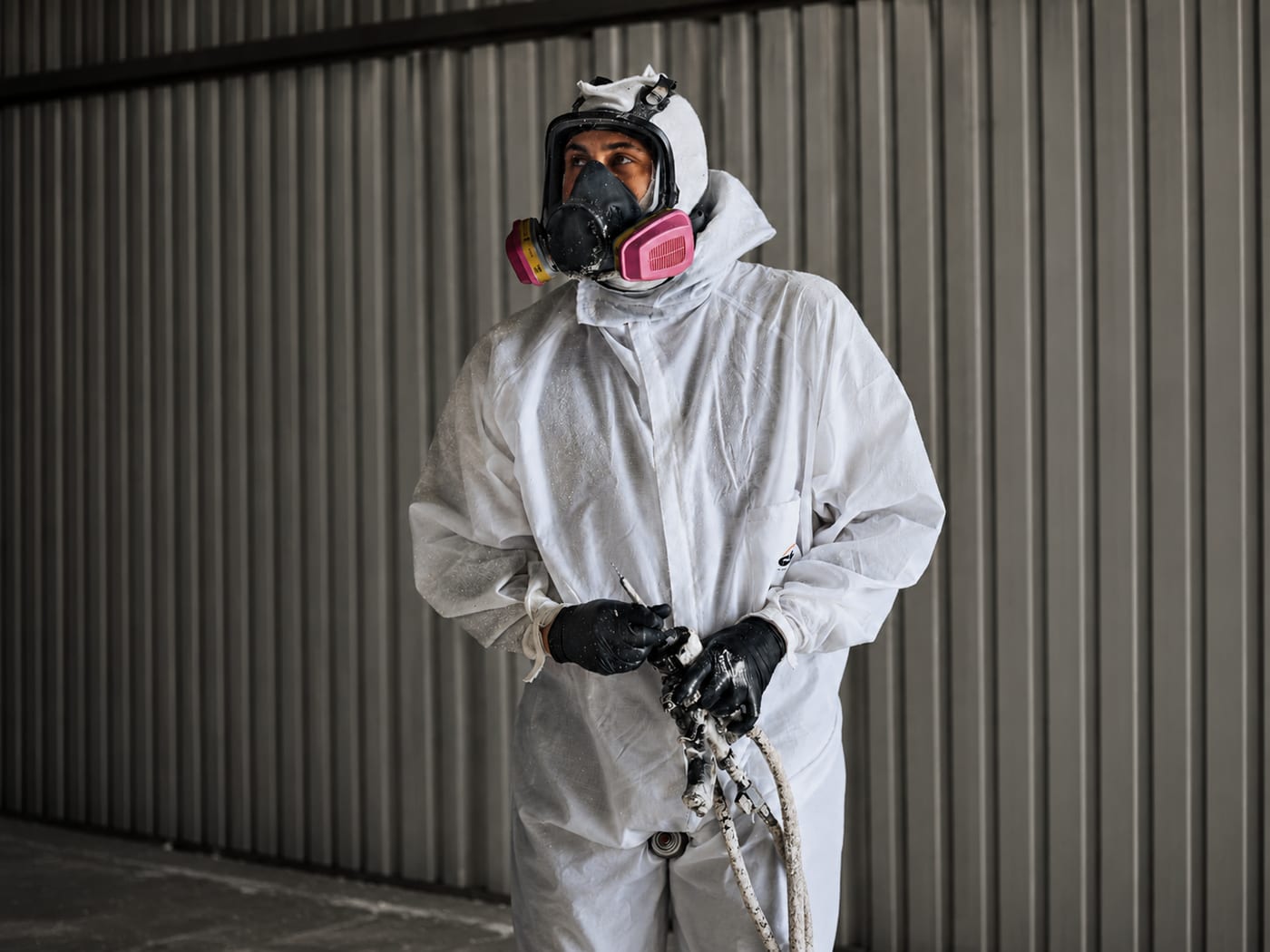
Supplied-air respirators (not simple dust masks or half-face cartridge respirators). Isocyanate aerosols and vapors require respiratory protection rated specifically for organic vapors and particulates. The pink/magenta P100 cartridges you see in the hero image of this blog are the standard for isocyanate protection.
Full chemical-protective suits (typically Tyvek or equivalent) covering the entire body. Isocyanates can sensitize through skin contact, not just inhalation. Bare arms, shorts, or street clothes in the work area are unacceptable.
Chemical-resistant gloves and full eye protection. Skin and eye contact with uncured foam components can cause irritation, rashes, and sensitization.
Ventilation equipment is positioned to move contaminated air away from the work area and out of the building.
Building evacuation during application. The EPA is clear: all occupants, pets, and non-crew workers must vacate the building during spraying and for a minimum of 24 hours after application.
If a crew arrives at your property without this equipment, do not let them spray. The safety protocols are not optional, and they are not negotiable. A contractor who skips PPE is either untrained, underequipped, or both.
How to Verify Your Contractor Takes Safety Seriously
Beyond seeing the equipment on the job site, here is what to verify before any foam is sprayed:
SPFA Professional Certification for the applicator who will actually be spraying. The SPFA PCP program is ISO 17024 compliant and requires demonstrated knowledge of chemistry, safety protocols, equipment operation, and application techniques. Ask for the individual's certification, not just the company's.
Product technical data sheets for the specific foam system being used. The TDS specifies application temperature ranges, mixing ratios, lift thickness limits, and re-entry times. A contractor who cannot provide this document does not know enough about what they are spraying.
A clear re-entry plan was communicated to you before the work began. The contractor should tell you exactly when it is safe to return, based on the specific product and conditions, not a generic "24 hours."
Liability insurance and workers' compensation coverage. If an uninsured crew member is injured by chemical exposure on your property, the liability may fall on you as the property owner.
References from completed projects. Ask specifically about any odor complaints, callback issues, or re-spray situations. A contractor with a clean track record will share references willingly.
For more detail on what to look for in a finished installation, see our guide: Common Spray Foam Installation Mistakes and How to Spot Them.
The Bottom Line: Cured Foam Is Safe, But Getting There Requires a Professional
Spray foam insulation, once properly installed and fully cured, is one of the safest and highest-performing insulation products available. It does not off-gas, does not degrade, and does not pose a health risk to occupants under normal conditions. Every concern about spray foam safety relates to the installation process, not the finished product.
That installation process involves hazardous chemicals at concentrations that exceed federal occupational exposure limits, equipment that costs tens of thousands of dollars to operate correctly, and training that takes years to master. It is not a weekend project. It is not a YouTube tutorial. And the cost of getting it wrong (remediation, health effects, lost time) far exceeds the cost of hiring a qualified professional to do it right.
Ready to Have Your Project Done Safely by a Trained Crew?
At Rocking Rad Spray Foam LLC, safety is built into every project. Our applicators wear supplied-air respirators, chemical-protective suits, and full PPE on every job. We follow EPA and SPFA safety protocols, provide clear re-entry guidance for every product we use, and walk every project with the building owner after completion. Free on-site estimates and 0% financing available across Oklahoma. Contact us or fill out our online form to schedule yours.
Frequently Asked Questions
Are DIY spray foam kits from the hardware store safe to use?
For small gap-filling tasks (around windows, under doors, around pipe penetrations) using single-component canned foam, the risk is manageable with basic precautions (gloves, ventilation, eye protection). For two-component spray foam kits that cover walls, ceilings, or large areas, most safety experts advise against DIY use indoors because the chemical exposure risk is significant and the equipment does not provide the temperature and ratio control needed for consistent, safe curing.
How do I know if my spray foam was installed safely?
Properly installed and cured foam is cream or off-white in color, firm to the touch (closed-cell) or springy (open-cell), and has no persistent chemical odor after 48 hours. If you smell a strong, lingering chemical odor days after installation, if the foam is discolored or sticky, or if you experience respiratory irritation when entering the treated space, contact your contractor immediately. These are signs of improper curing that need professional evaluation.
Is spray foam safe for my family once it cures?
Yes. Once fully cured (typically within 24 hours), spray foam is considered chemically inert by the EPA. The isocyanates have fully reacted and are no longer active. Cured foam does not off-gas under normal conditions and is safe for children, pets, and occupants. The safety concern exists only during and immediately after application, which is why building evacuation during that period is required.
What should I do if I smell chemicals after the crew leaves?
Ventilate the space by opening windows and running fans. A faint odor in the first 24 to 48 hours can be normal and should dissipate. A strong, persistent chemical smell beyond 48 hours is not normal and may indicate off-ratio foam. Do not occupy the space until the odor is evaluated by your contractor. If symptoms like headaches, eye irritation, or breathing difficulty occur, leave the area and seek medical attention.
Can I watch the installation from another room?
The EPA recommends vacating the entire building during spray foam application and for at least 24 hours afterward. Vapors and aerosols can migrate through the building through HVAC systems, open doors, and ceiling penetrations. Watching from another room still exposes you to chemical migration. Leave the building entirely and return only after the contractor confirms re-entry is safe.
Why does professional installation cost more than a DIY kit?
Professional spray foam installation includes the cost of commercial-grade equipment ($30,000 to $80,000+), trained and certified applicators, full PPE for every crew member, chemical inventory managed at correct temperatures, insurance and workers' compensation, proper masking and cleanup, and post-installation verification. A $400 DIY kit includes none of these. The price difference reflects the difference between a controlled chemical application and an uncontrolled one.