Your Attic Is Costing You Every Month. Find Out Exactly How Much.
Free in-home energy audit. Blower door test, thermal imaging, and a written report within 48 hours — so you can see, in real numbers, where your money is going. No obligation. We drive out, you keep the report either way.
Answer 3 Quick Questions — We'll Tailor Your Free Audit
No sales pitch. Just a straight-line path from "something's off with my house" to a written report with real numbers.
Step 1 of 4 · 60 seconds
What's bugging you most?
Pick the one that hits hardest — we'll focus there.
500+
Projects Completed
5.0★
Google Rating
A+
BBB Rating
Since 2019
Serving Oklahoma
Does This Sound Like Your Oklahoma Home?
If two or more of these apply, an unsealed attic is almost certainly what's driving your high bills, dust, and uneven temperatures — and we can prove it with real equipment in under 45 minutes.
Symptoms you're feeling
Red flags about your home
Check anything that applies — what you feel, and what's true about your home.
The symptoms aren't separate problems — they share one root cause: an attic that's leaking your conditioned air, sucking in outdoor air and contaminants, and running your HVAC system into the ground. The red flags are why your home is especially likely to have it. Keep scrolling — we'll show you what's happening up there.
Your Ducts Are Running Through a 150°F Oven
Here's something most Oklahoma homeowners have never thought about: your attic regularly hits 150°F in the summer. Not the outdoor temperature — the attic.
Now, where are your HVAC ducts? In most Oklahoma homes, they're running through that 150°F attic.
Your air conditioner is working hard to push 60°F air through those ducts. The ducts are wrapped in R-8 insulation, which sounds like a lot — but R-8 is not stopping a 90-degree temperature difference. That's called Delta T, and in Oklahoma it's the single biggest reason your AC can't keep up.
Think about what that actually means. You're paying your power company to cool air down to 60°F. Then — before that cool air ever reaches the vent in your living room — you're forcing it through ductwork running through a 150°F attic. So it gets warm again on the way. Then you cool it again. Then it gets warm again. Over and over. All day. Every day. From May through September.
That's what's eating your power bill. Not your thermostat setting. Not your windows. The 150°F oven above your ceiling.
Delta T — what actually happens
AC cools to 60°F
Air leaves the unit chilled
Ducts run through 150°F attic
Cool air heats up before it reaches you
Warm air at the vent
Thermostat triggers again. Repeat.
Whatever's in Your Attic Is in Your House
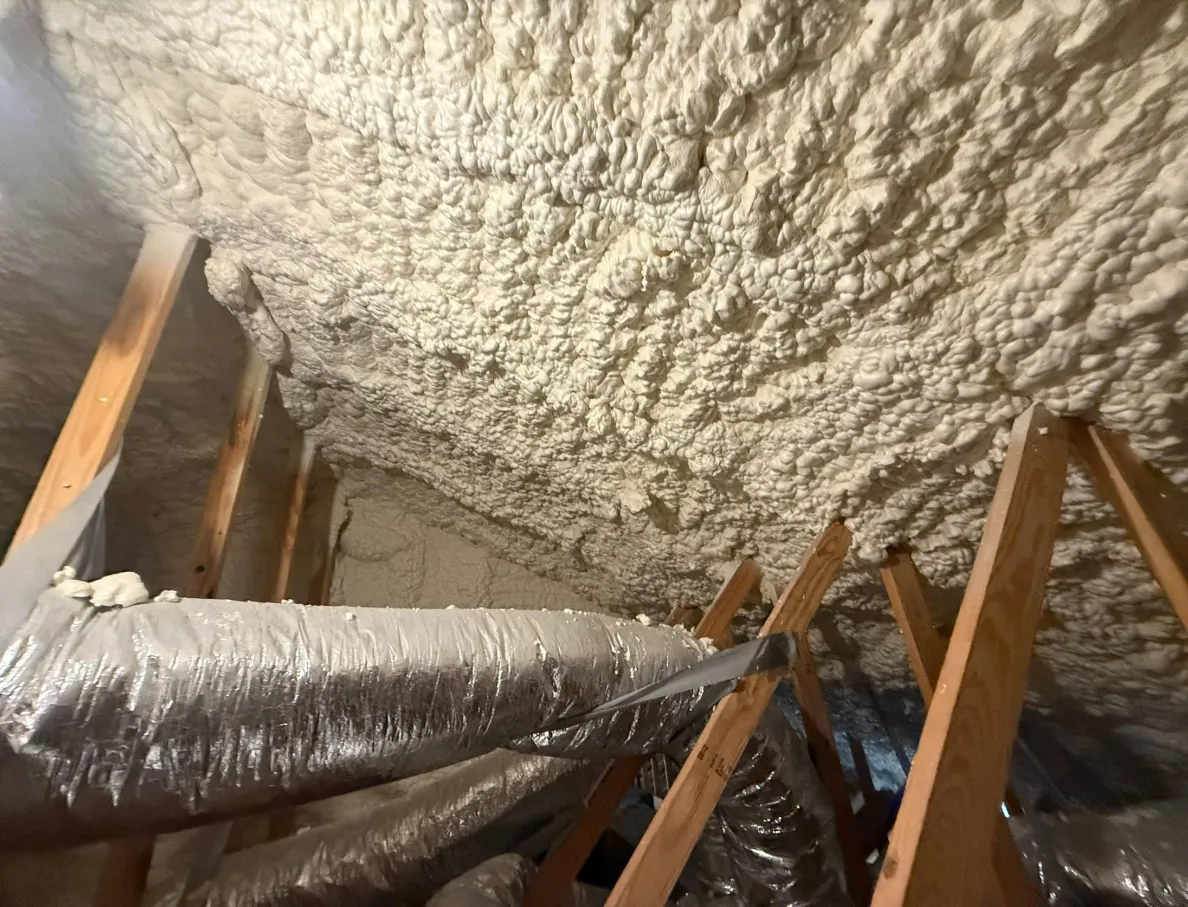
Your house doesn't hold its air. It turns over — new air in, old air out — about six times per day. So where does the new air come from? Not just your doors and windows. Most of it comes from your attic.
Every home has soffit vents and gable vents that pull outside air into the attic. Then your HVAC cycles, the pressure in your house changes, and that attic air gets pulled down into your living space — through every light fixture, every wall penetration, every chase, every gap you can't see.
So ask yourself: when was the last time you were in your attic?
Because whatever's up there is what you and your family are breathing. In most Oklahoma attics, that means:
- •Decades of dust that came in through the vents
- •Broken-down insulation particles (more on that below)
- •Mold spores from humidity events
- •Droppings from whatever rodents and insects have been up there
- •Pollen and outdoor allergens pulled in through soffit vents in every season
If someone in your house has allergies, asthma, or random breathing issues that never quite go away — this is where to start looking.
If Your House Is Dusty, Your Insulation Is Probably the Reason
Most Oklahoma homes have one of two types of attic insulation:
Fiberglass — the pink or yellow fluffy stuff. It breaks down. Moisture, humidity, time — it all degrades it. The R-value you paid for 20 years ago is not the R-value you have today.
Cellulose — the gray, shredded paper-looking stuff. This is the real culprit for most Oklahoma dust problems. Cellulose settles, compacts, absorbs moisture, and holds onto every contaminant that enters the attic. Rodent droppings. Mold. Pollen. Dust. Everything that lands on cellulose gets absorbed — and then slowly released into the air you breathe.
Identify yours in 60 seconds
Open your attic hatch and shine a flashlight in.
- → Gray, shredded-paper-looking insulation? That's cellulose.
- → Fluffy pink or yellow fiberglass batts or blown-in? That's fiberglass.
- → Hard yellow or white foam? You've already been sprayed.
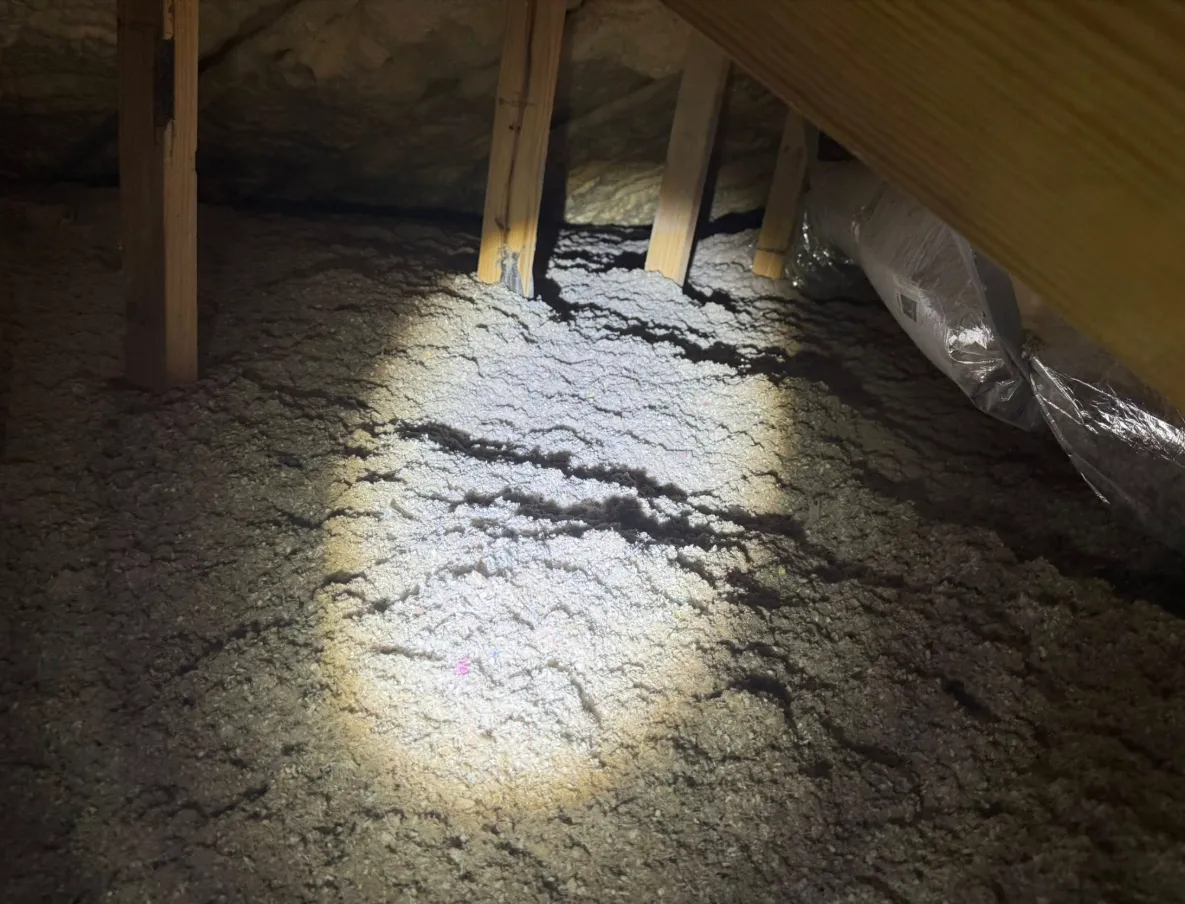
"I'll look around at people's houses and ask, 'Do you guys have a problem with dust blowing out of the vents?' And they go, 'Yeah, it's always dusty over here.' Then I go up in the attic — and sure enough, it's cellulose every single time."
— Kyle, Rocking Rad Spray Foam
A Straight Answer About Whether Your Home Needs This
We're going to tell you something other insulation companies won't: not every home is a good candidate for a full spray foam retrofit.
The sweet spot is homes built in 2005 or earlier. Here's why. In 2006, Oklahoma adopted updated building codes that required builders to air-seal the top plates in attics — the seams where your walls meet the ceiling. Homes built in 2005 or earlier almost never have proper top plate sealing, which means they leak conditioned air directly out of the living space and into the attic, 24 hours a day.
Retrofitting a 2005-or-earlier home is where the big gains live — typically 30–40% energy savings after install.
If your home was built in 2006 or later, you might still benefit from spray foam retrofit — but the ROI is smaller, and sometimes a targeted air-sealing-only approach (just sealing penetrations, not encapsulating the roof deck) is the right call.
Either way, the audit tells you. If we walk into your attic and the answer is "you're in good shape, you don't need this," we'll tell you. We'd rather be honest and get a referral than sell you something that doesn't pay for itself.
Year your home was built matters. So does your existing insulation type, your HVAC location, your duct condition, and half a dozen other things. That's what the audit is for. Book it and we'll tell you exactly where you stand.
Here's What We Actually Do to Your Attic
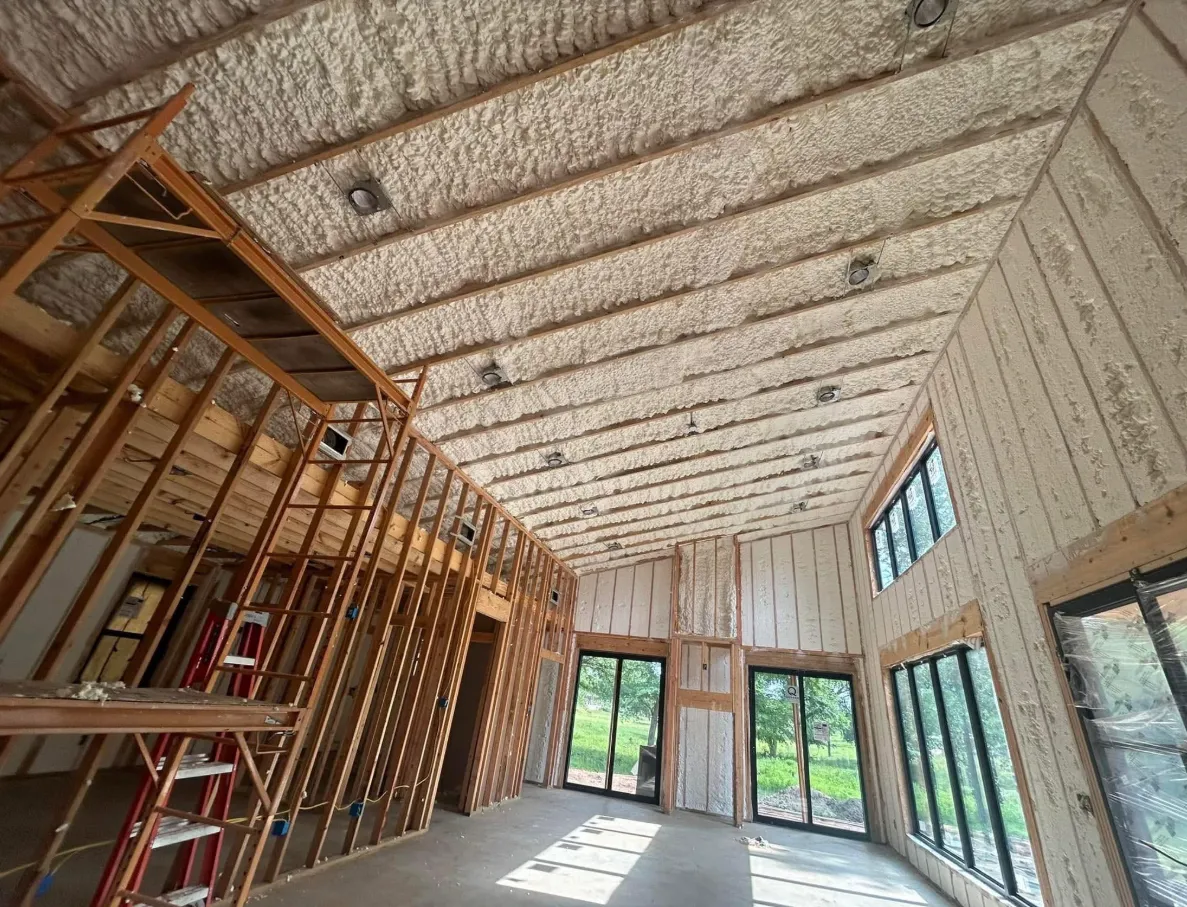
Most homeowners picture spray foam as "extra insulation piled on top of what's there." It's the opposite. Here's the actual process:
Remove all existing attic-floor insulation
The old cellulose or fiberglass sitting on your ceiling comes out. If we foam the roof deck over old insulation, we create a moisture trap — so removal is mandatory, and it's included.
Spray the underside of the roof deck
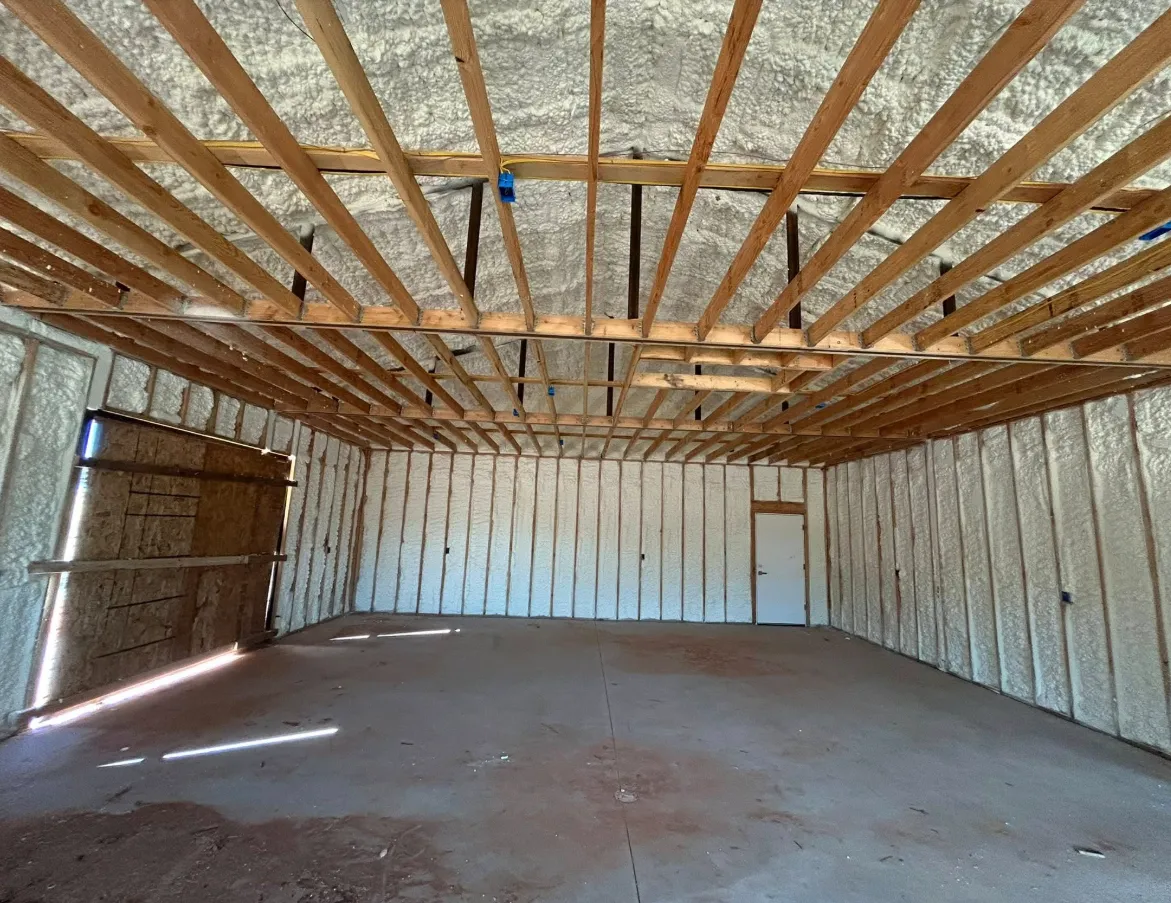
Not the floor. The roof itself, from the inside. We spray a minimum of 6 inches of open cell foam into the rafter bays. This is what creates the sealed envelope.
Seal off the soffit and gable vents
No more outdoor air being pulled into the attic. No more 150°F cavity.
Your attic becomes a conditioned space
Within 4–5°F of your living room. Your HVAC ducts are now inside the conditioned envelope — no more Delta T. Your house is now sealed from outside air — 100% control of your indoor environment.
Before
150°F attic
- • Contaminated air being pulled into home
- • Ducts fighting heat all summer
- • Old insulation degrading + holding dust
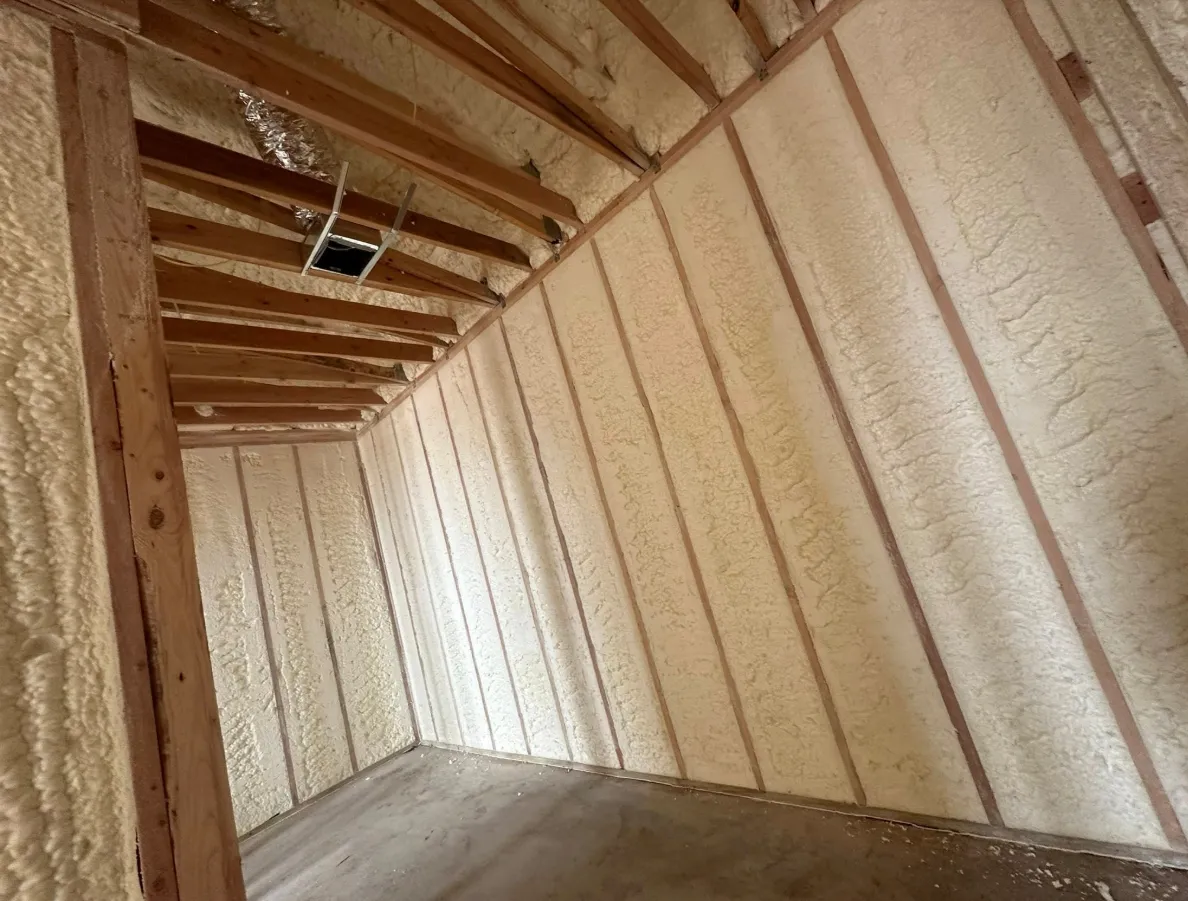
After
Conditioned attic
- • Sealed envelope — no outdoor air infiltration
- • Ducts inside the envelope — no Delta T
- • Clean air, consistent temp, efficient HVAC
Three Ways This Pays You Back — Not One
Most insulation marketing talks about lower power bills. That's real, but it's only one of three ways a spray foam retrofit puts money back in your pocket.
Lower Energy Bills — Immediately
30–40% savings on heating and cooling, starting with your next billing cycle. Oklahoma's 3rd-hottest summers and coldest winter snaps mean HVAC runs hard here. Cut that by a third and you feel it every month.
Your HVAC System Lasts Longer
Your AC and furnace no longer fight a 150°F attic. They cycle less, run shorter, and work under less load. HVAC equipment that should last 12 years often lasts 18+ after a proper retrofit — one full replacement cycle you get to skip.
Your Next HVAC Can Be Smaller
When your house actually holds its temperature, it doesn't need as much HVAC capacity. Homes that used to need a 3.5-ton unit often only need a 3-ton after a retrofit. Your next HVAC replacement will cost you less because of what you do now.
Stacked correctly, a spray foam retrofit often pays for itself in 3–5 years — and keeps paying for the life of the house.
We're Not Just Insulation Guys
Most insulation contractors walk through your house, eyeball the attic, and quote a number. We don't work that way. Everything we do is backed by measurement — not guesswork.
Manual J Load Calculations
We calculate the actual heating and cooling load of your home based on square footage, window area, insulation values, orientation, and air leakage. No oversized HVAC. No undersized.
HERS Energy Ratings
HERS is the official energy score of your home — like miles-per-gallon for a house. Lower = more efficient. A typical older home scores 100+. A high-performance home under 50. We run HERS in-house.
RESNET Certified
We're certified by RESNET, the national organization that sets the standard for home energy testing. Every measurement we take is done to Department of Energy standards.
Done In-House
We don't subcontract the technical work. Our own team runs the blower door, thermal imaging, load calcs, and HERS ratings. One team, one accountability chain.
And When You Hire the Wrong Crew — This Happens
We got called to a home recently because the homeowner said, "Something feels off. The house feels humid. Almost wet. And there's a smell."
Here's what we found:
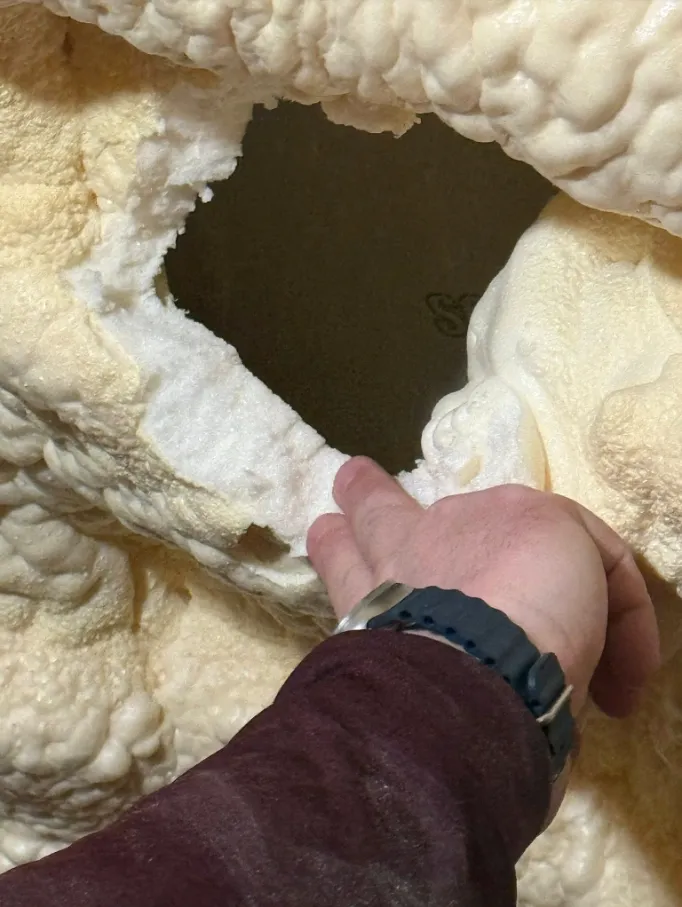
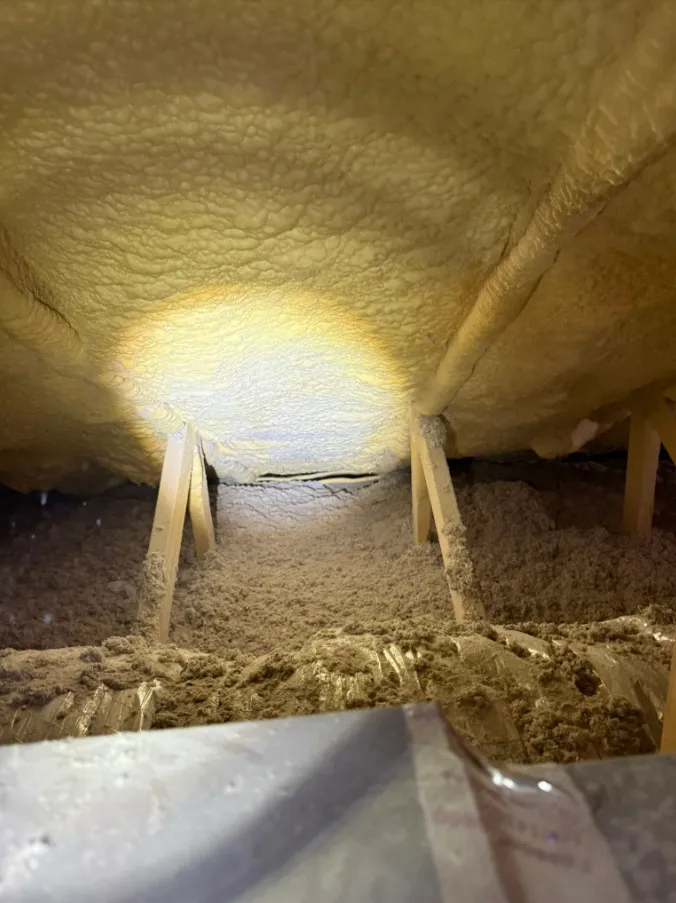
90% of the foam had zero adhesion to the roof deck — it was literally falling off
Only 2–3 inches applied — not even close to enough to perform
Poor cell structure — the product wasn't even sprayed correctly when it was installed
The previous installer's "solution" when the foam wasn't working? Blow 14–20 inches of cellulose on top of it, on the ceiling.
The result was a disaster:
- Trapped moisture between the failed foam and the cellulose
- Mold starting to grow across the attic
- Insulation absorbing water instead of insulating anything
Here's what we did to fix it:
- Removed all the wet, contaminated cellulose
- Removed all the failed foam
- Dried the structure back to proper moisture levels
- Treated the mold-starting areas
- Re-sprayed 7 inches of open cell foam — the correct way
The lesson: the product is only as good as the crew installing it. Spray foam done right is one of the best investments you can make in your home. Spray foam done wrong is a nightmare.
That's why the audit matters. We go in, we measure, we show you photos, and we tell you exactly what's up there — whether it was installed by us or someone else.
Here's What You Actually Get — Free
This is a real energy audit, not a 10-minute sales walkthrough. Here's exactly what we do and what you walk away with.
Blower Door Test
We pressurize your home with calibrated equipment and measure exactly how much outside air is leaking in. A real, measured number — not a guess.
Thermal Imaging Scan
We walk your home with a thermal camera and show you, in real time, where heat is escaping or entering. Every air leak, every cold spot, every insulation gap — visible on the screen.
Physical Attic Inspection
Our tech goes up into the attic — not just a peek from the hatch. We photograph existing insulation, measure depth, assess condition, and document air leak points.
Duct Assessment
If your ducts are in the attic, we document their condition, insulation rating, and how much they're being affected by the Delta T problem.
Written Report Within 48 Hours
You receive a written report with real photos of your actual attic, measured R-values, blower door results, and thermal imaging highlights. Whether you hire us or not, the report is yours.
Custom Retrofit Options
If a retrofit makes sense, we present options with real numbers — not ballparks. Full roof deck spray foam, partial retrofit, or air-sealing-only. You choose. Or you don't.
Audit Time
45–60 min on-site
Report Delivery
Within 48 hours
Cost
$0 — completely free
Worried About the Cost? Read This.
Most attic retrofits in Oklahoma run $8,000–$15,000 depending on square footage, existing insulation removal, and foam thickness.
That's real money. We get it. And we also know that most homeowners don't have $10,000 sitting in a drawer — even when they know they're losing that same amount over 3–5 years in wasted energy.
So we partnered with Hearth to offer 0% and low-interest financing for qualified homeowners.
The Simple Math
- • Your monthly Hearth payment is typically less than what you're currently losing to inefficiency.
- • You save money starting month one — the energy savings exceed the payment.
- • By the time financing is paid off, the system keeps saving you money for the life of the home.
✓ Residential and shop building retrofits eligible
✓ Spray foam, blown-in, retrofits, and old-insulation removal all covered
✓ Pre-qualification doesn't affect your credit
✓ Terms up to 15 years available
✓ 0% promotional rates for qualified applicants
Here's How to Get Started
Book Your Audit
Pick a date and time below or call (580) 320-5620.
We Run the Audit
Our tech shows up in a marked truck, runs the blower door test, scans with the thermal camera, goes up in the attic, and documents everything. 45–60 minutes. Follow along, ask questions, or stay inside — your call.
You Get Your Report
Within 48 hours, a written report with real photos, measured numbers, and — if applicable — retrofit options with real pricing and financing info. Whether you hire us or not, the report is yours to keep.
Book Your Free Energy Audit
All audits are 45–60 minutes. We confirm within one business hour during business hours (Mon–Fri, 7 AM – 5 PM).
Service Area
Ada (HQ), OKC, Norman, Tulsa, Shawnee, McAlester, Durant, Ardmore, Stillwater, Lawton — and surrounding Oklahoma.
Questions Oklahoma Homeowners Ask Us
Is the audit actually free? What's the catch? ▼
How long does the audit take? ▼
My home is newer — built in 2006 or later. Is this still worth doing? ▼
What's a blower door test and why does it matter? ▼
Do you actually go into the attic, or just look from the hatch? ▼
What if the foam previously installed in my attic is the wrong thickness or failing? ▼
How much does a retrofit typically cost? ▼
How soon can you come out? ▼
What areas do you serve? ▼
What Oklahoma Homeowners Are Saying
"Had Rocking Rad spray foam our attic last month. The difference is night and day — our upstairs bedrooms used to be 5-6 degrees hotter than downstairs, and now the whole house stays even. First electric bill after was $40 less than the same month last year. Rayce and his crew were professional, showed up when they said they would, and cleaned up everything. Highly recommend."
— James R., Ada, OK · Attic Retrofit
Related Services
Retrofit & Air Sealing
The full service this audit leads into
Learn more →
Open Cell Spray Foam
Standard spec for roof deck retrofits
Learn more →
Blower Door Testing
Standalone certified testing for builders and homeowners
Learn more →
Residential Insulation
Whole-home comfort beyond the attic
Learn more →
See What Your Attic Is Actually Costing You.
Free energy audit. Real equipment. Written report within 48 hours. Zero obligation. 0% financing available on any work you decide to do.
Woman-Owned · BBB A+ Rated · RESNET Certified · Licensed Home Builders · 0% Financing · No Obligation