
Why Spray Foam Beats Every Other Insulation
Compare the facts. Spray foam delivers better performance, longer life, and lower total cost than fiberglass, cellulose, or mineral wool.
The Complete Comparison
| Property | Spray Foam | Fiberglass | Cellulose | Mineral Wool |
|---|---|---|---|---|
| R-Value per Inch | R-3.7 (OC) / R-6.5 (CC) | R-2.2 – R-3.8 | R-3.2 – R-3.8 | R-3.0 – R-3.3 |
| Air Sealing | Complete (built-in) | None | Partial | None |
| Moisture Barrier | Yes (closed cell) | No | No | No |
| Lifespan | Lifetime of structure | 10–25 years | 20–30 years | 30+ years |
| Settles Over Time | No | Yes | Yes (15–20%) | Minimal |
| Pest Resistant | Yes | No | Treated | Yes |
| Sound Dampening | Excellent | Good | Good | Excellent |
| Structural Support | Yes (closed cell) | No | No | No |
See the Difference Spray Foam Makes
From bare metal to a fully insulated, comfortable building — here's what professional spray foam insulation looks like.
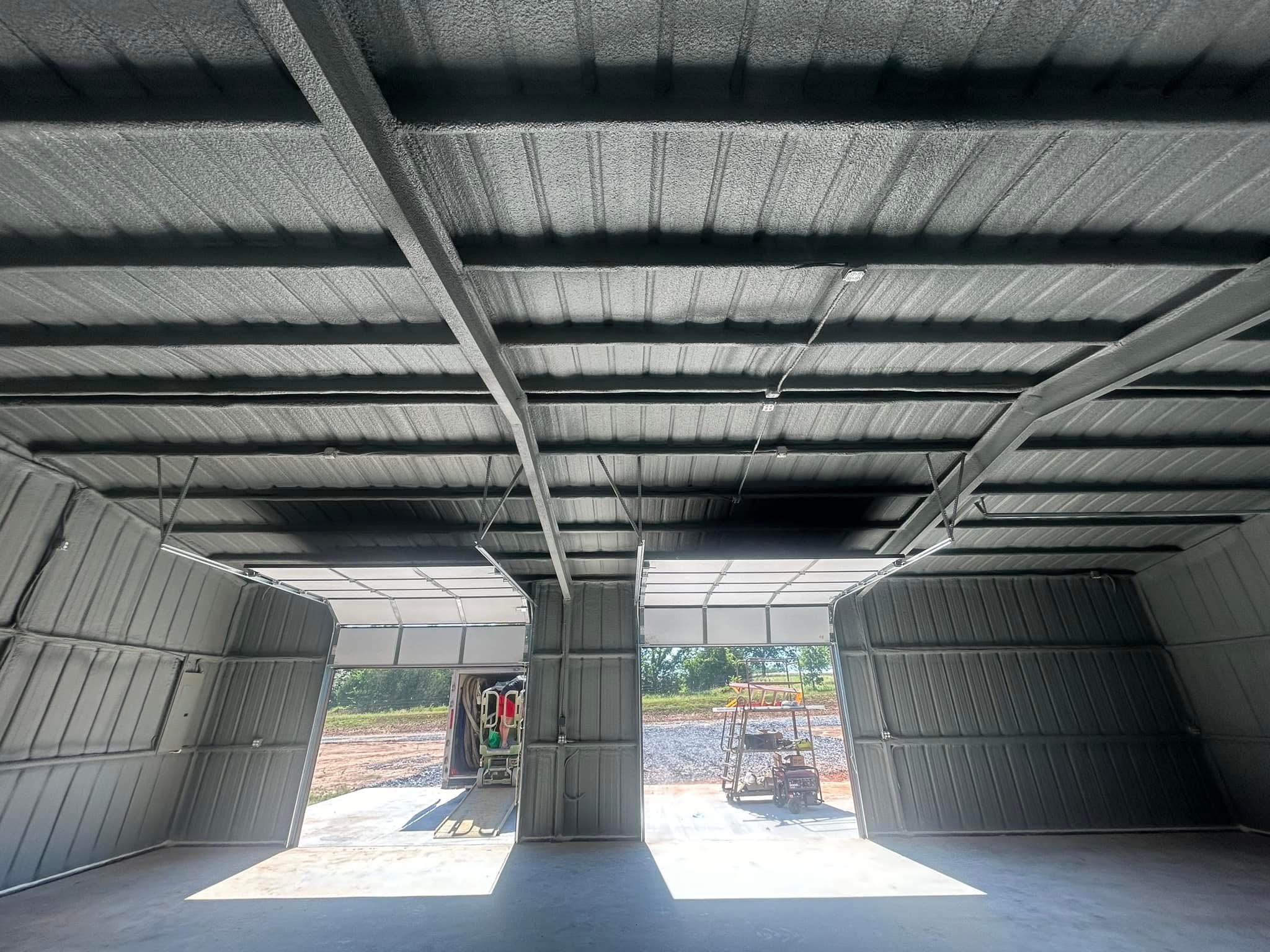
Bare Metal — No Insulation
Exposed steel framing with no thermal protection. Extreme heat in summer, freezing cold in winter, and heavy condensation year-round.
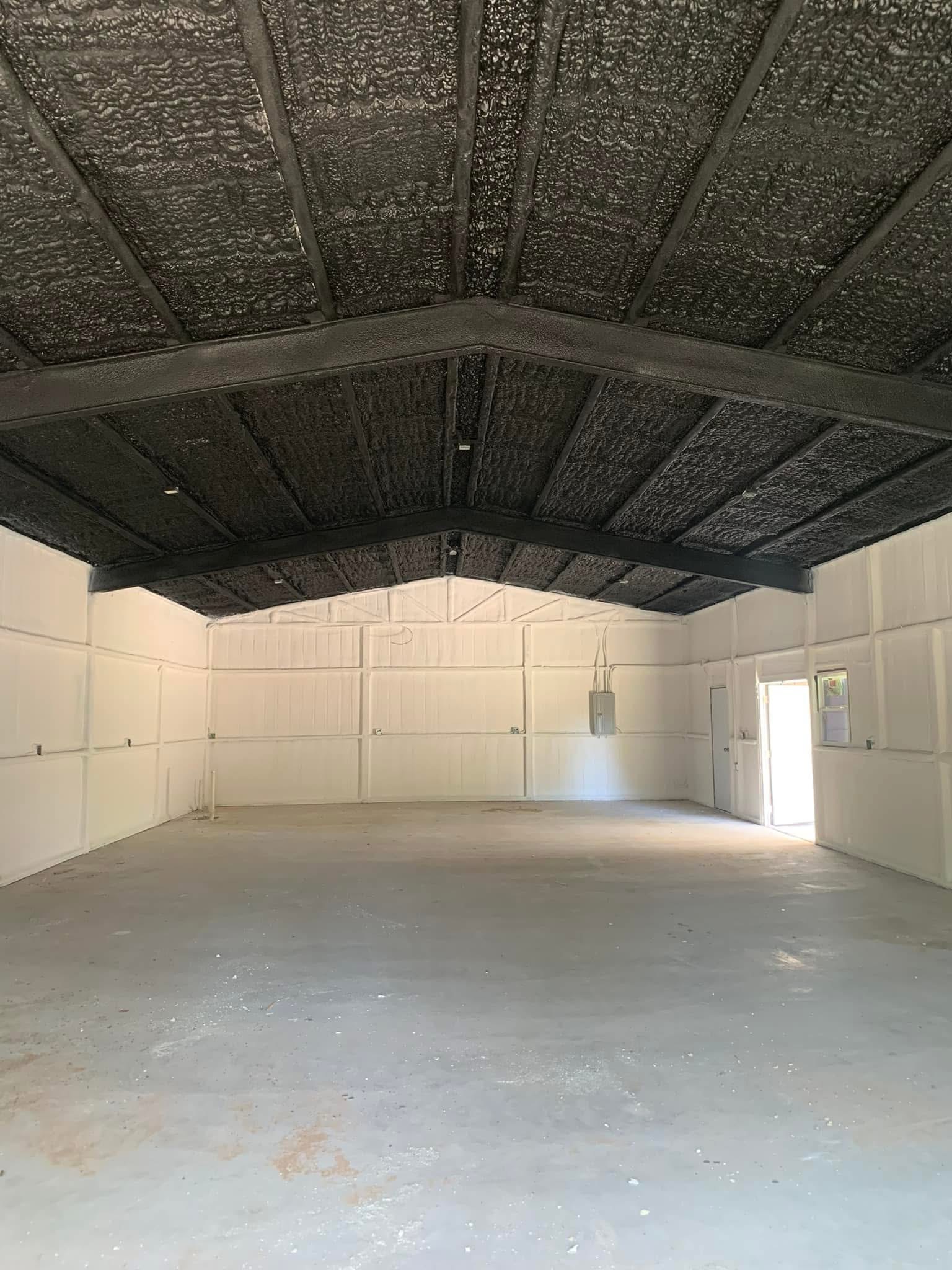
Closed Cell Spray Foam — Complete Coverage
Full thermal and moisture barrier on walls and ceiling. Comfortable year-round with dramatically lower energy costs.
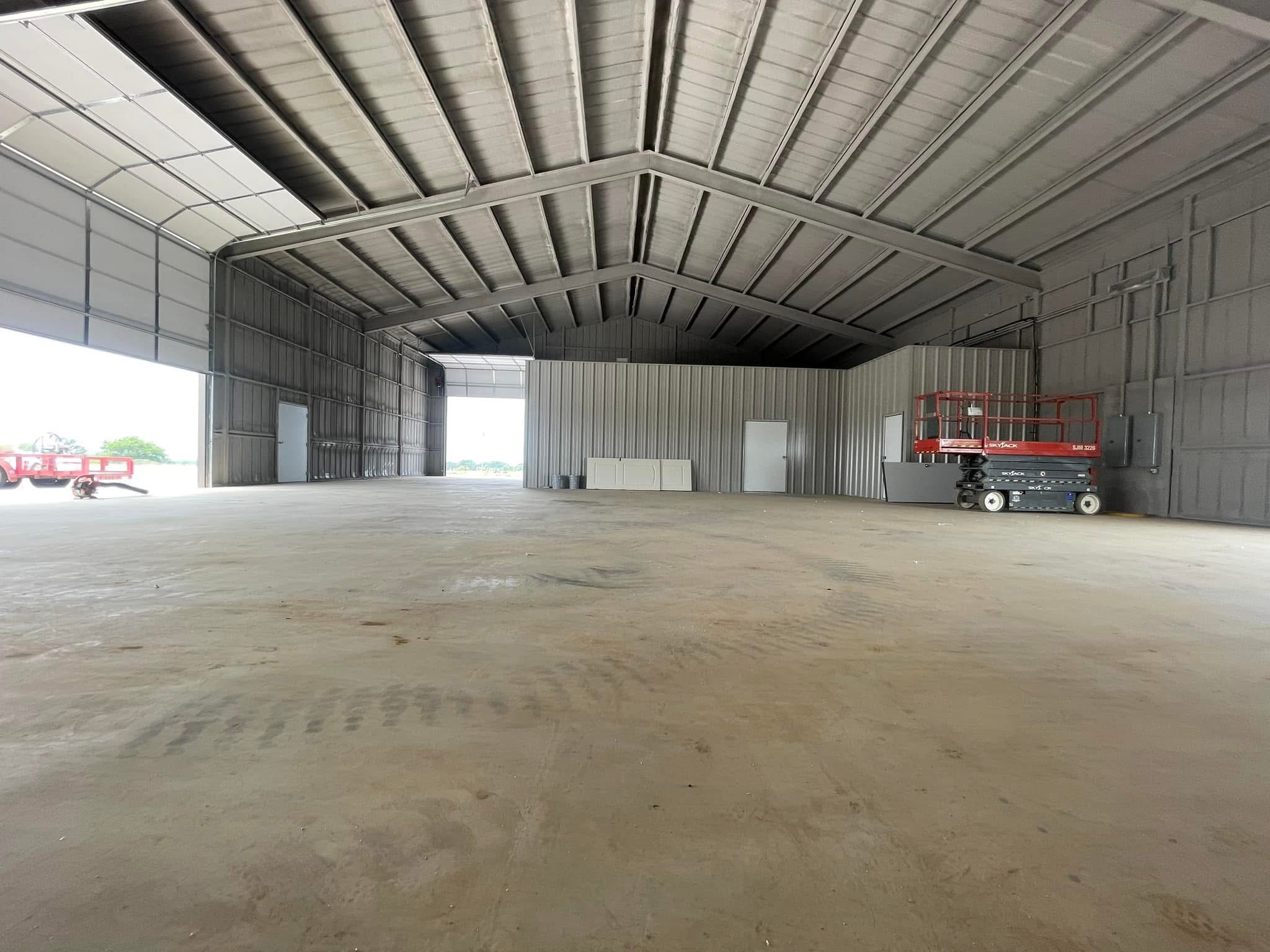
Commercial Metal Building — Uninsulated
A large commercial structure with no insulation — energy costs through the roof and uncomfortable conditions for workers.
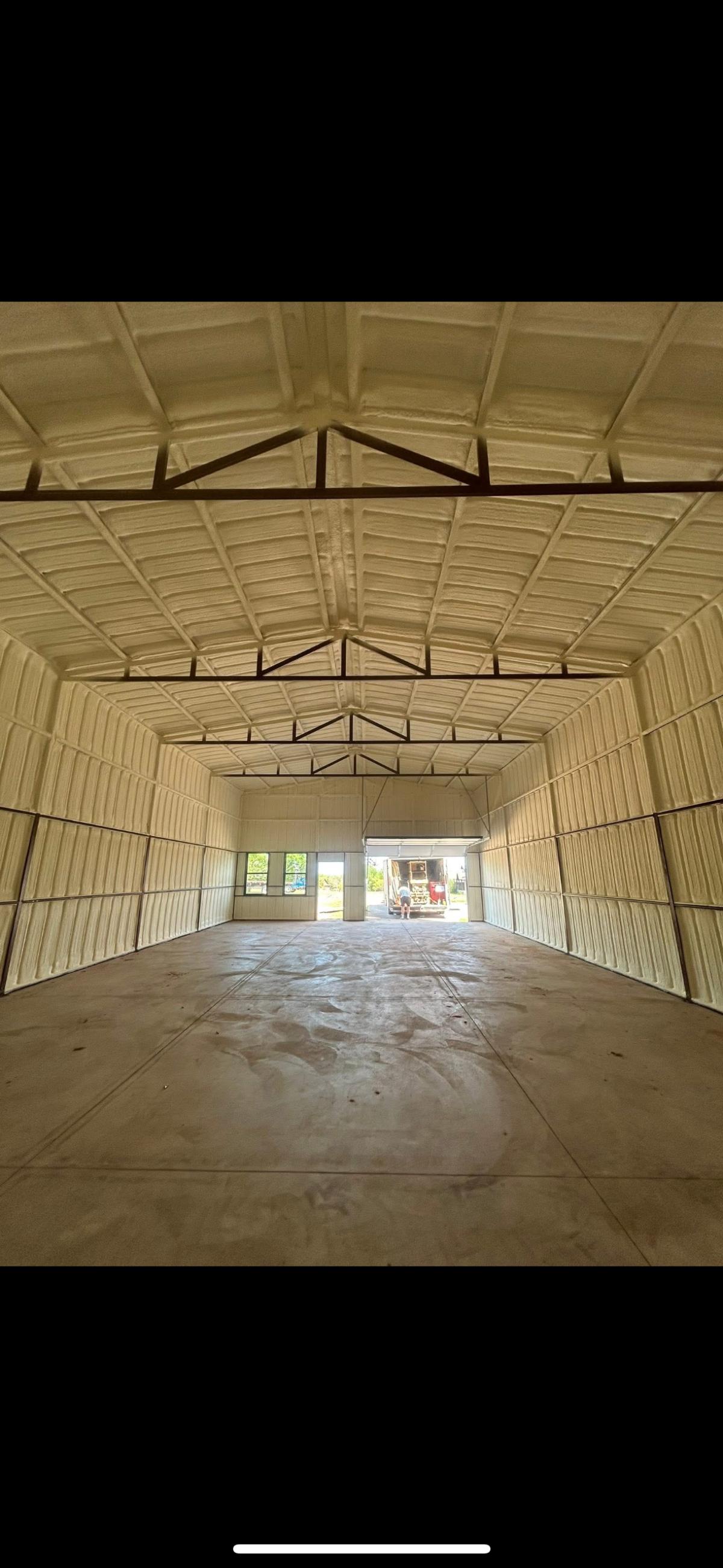
Spray Foam Insulation — Completed Interior
Full spray foam envelope transforms the building into a climate-controlled workspace, cutting energy costs up to 50%.
Built for Oklahoma's Climate
Oklahoma's extreme weather makes insulation more important here than almost anywhere else in the country.
Extreme Heat
Oklahoma summers regularly exceed 100°F. An uninsulated attic can reach 150°F, turning your ceiling into a radiant heater. Spray foam keeps that heat where it belongs — outside.
Ice Storms & Cold Snaps
Oklahoma winters bring ice storms and sudden temperature drops. Spray foam's airtight seal prevents cold air infiltration that fiberglass can't stop.
Severe Weather
Closed cell spray foam adds structural rigidity to walls and roofs — up to 300% improvement in rack strength. That matters when Oklahoma's severe weather hits.
High Humidity
Oklahoma's humidity creates condensation problems, especially in metal buildings. Closed cell foam is a built-in vapor barrier that eliminates condensation at the source.
Cost-Per-Year Analysis
Spray foam costs more upfront, but when you factor in energy savings and replacement costs, it's the cheapest insulation over time.
Fiberglass Batts
Replace every 15–20 years
Higher
Lower upfront, but ongoing energy waste + replacement every 15–20 years
Blown Cellulose
Settles 15–20%, retreat every 10 yrs
Medium
Moderate upfront, but settles over time + periodic retreat costs
Spray Foam
Lasts lifetime, never replace
Lowest
Higher upfront, but zero energy waste + zero replacement over 30+ years
*Comparison is relative. Actual costs vary by project — contact us for a free estimate.
Common Myths Debunked
Myth: "Spray foam is too expensive."
Fact: When you factor in energy savings (30–50% reduction) and the fact that spray foam never needs replacement, it's the most cost-effective insulation over the life of your home. Fiberglass needs replacing every 15–25 years, making spray foam the better long-term value.
Myth: "Fiberglass does the same thing."
Fact: Fiberglass insulates, but it doesn't air seal. Studies show that air leakage accounts for 25–40% of a home's energy loss. Spray foam is both insulation and air barrier in one application.
Myth: "Spray foam traps moisture and causes mold."
Fact: The opposite is true. Closed cell spray foam is a vapor barrier that prevents moisture from entering wall cavities. Open cell foam allows walls to dry in both directions. Properly installed spray foam reduces mold risk.
Myth: "Spray foam off-gasses dangerous chemicals."
Fact: Spray foam is fully cured within 24 hours of installation. Once cured, it's inert and produces no off-gassing. During installation, our crew wears full protective equipment and ventilates the space.
Myth: "You can get the same results with DIY spray foam kits."
Fact: DIY kits use a different formulation than professional-grade spray foam. Professional equipment heats the chemicals to precise temperatures and applies at exact ratios. Improper mixing or temperature causes poor expansion, off-gassing, and failed insulation.
Ready to Cut Your Energy Bills?
Get a free, no-obligation estimate for your home or business. Most quotes delivered same-day.
Woman-Owned • BBB A+ Rated • 0% Financing Options • No Obligation