Condensation Dripping in Your Metal Building? Here's the Fix
You walk into your metal shop on a spring morning and everything is wet. The roof is dripping, the walls are sweating, and your tools, vehicles, or equipment are covered in moisture. Sound familiar?
This is the single most common complaint we hear from Oklahoma metal building owners. And there’s only one permanent fix.
Why Your Metal Building Sweats
Condensation forms when warm, moist air contacts a cold surface. In a metal building, that happens constantly:
- Spring and fall: Daytime temperatures warm the interior air. At night, the metal panels cool rapidly. The warm interior air hits the cold steel and — condensation.
- Winter: You heat the interior with a space heater or HVAC. The warm, humid air rises and contacts the uninsulated cold metal roof. Water drips.
- Morning dew: Overnight temperature drops cause the steel to cool below the dew point. Moisture forms on every metal surface.
The fundamental problem: bare metal has zero thermal break. The interior surface temperature of an uninsulated metal panel tracks the outdoor temperature almost exactly. Any time there’s a temperature differential between inside and outside air, you get condensation.
What Doesn’t Work
Ventilation alone — Ridge vents and wall louvers can reduce moisture buildup, but they don’t eliminate it. You’re still left with cold metal surfaces that cause condensation every time conditions are right.
Fiberglass batts — Fiberglass is air-permeable. Warm, moist air passes right through it and still contacts the cold metal behind. The fiberglass then traps the moisture, sags, and becomes useless. We’ve pulled out soaking wet fiberglass from dozens of Oklahoma metal buildings.
Radiant barriers — Reflective insulation helps with radiant heat in summer but does nothing to prevent condensation. The metal surface is still cold, and air still reaches it.
Dehumidifiers — They treat the symptom, not the cause. You’ll run them 24/7 and still have condensation on the coldest mornings.
The Permanent Fix: Closed Cell Spray Foam
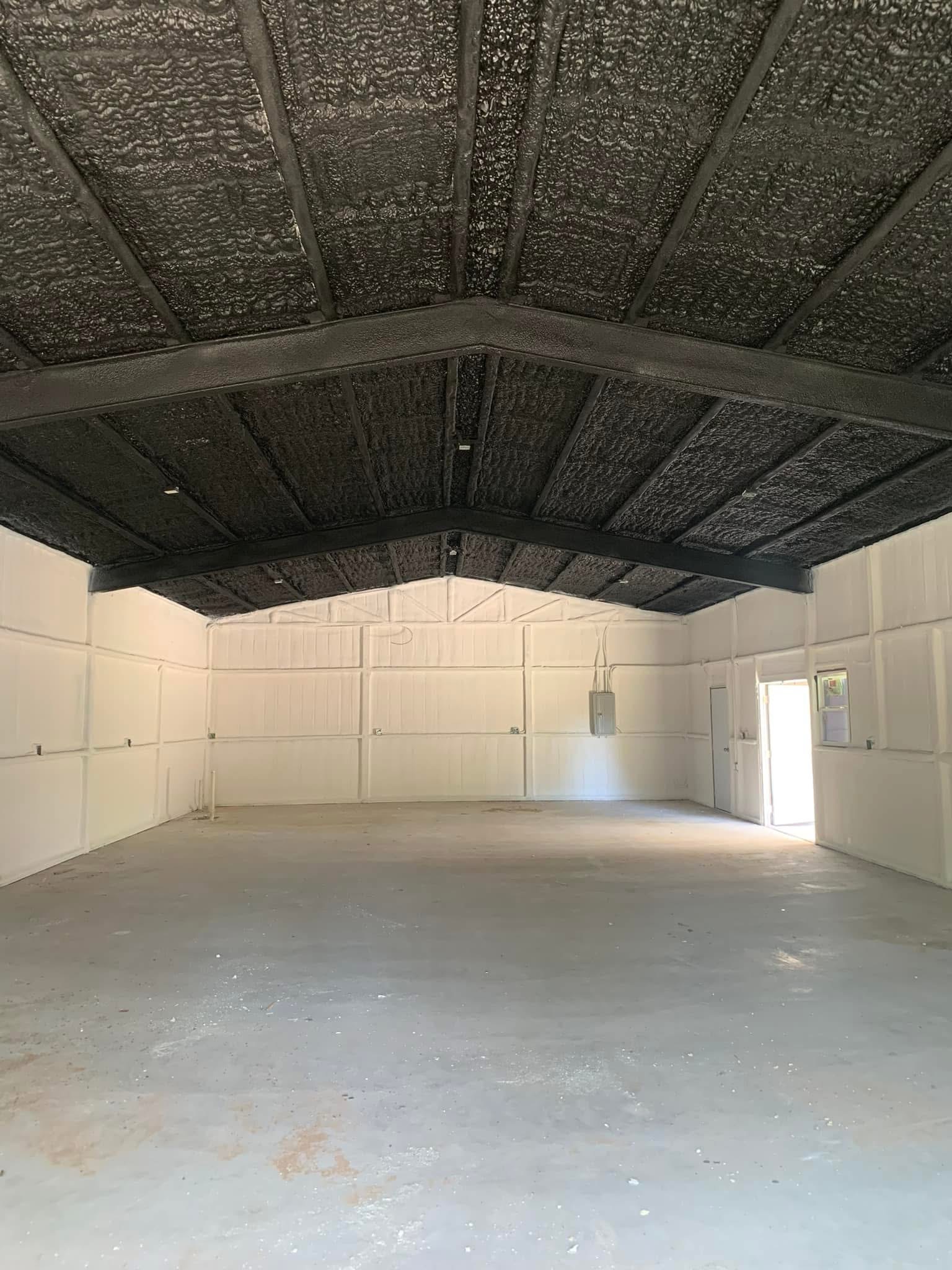
Closed cell spray foam applied directly to the interior of the metal panels creates a thermal break — the foam separates the interior air from the cold metal surface. When warm air can’t contact cold steel, condensation can’t form.
Additionally, closed cell foam is a vapor barrier at 2 inches of thickness. Moisture vapor in the air can’t migrate through the foam to reach the metal. This is what separates spray foam from every other insulation option for metal buildings.
What 2 Inches Does
- Eliminates 100% of condensation on insulated surfaces
- Delivers R-13 insulation value
- Acts as a complete vapor barrier
- Reduces rain noise by 50%+
- Adds structural rigidity to wall and roof panels
The Process
For a typical 30x50 metal shop:
- We mask windows, doors, and any surfaces that shouldn’t be sprayed
- Two inches of closed cell foam applied to walls and ceiling
- Foam cures within seconds of application
- Cleanup and trim same day
- Total time: 6–8 hours. Your building is usable the next day.
Cost
| Building Size | Approximate Cost |
|---|---|
| 24x30 (small shop) | $5,000–$8,000 |
| 30x50 (standard shop) | $8,000–$12,800 |
| 40x60 (large barn) | $11,200–$17,920 |
This is a one-time investment. Spray foam is permanent — it doesn’t degrade, sag, or need replacement. Compare that to the ongoing cost of replacing rusted equipment, damaged inventory, or running dehumidifiers year-round.
Stop the Drip
If your metal building is sweating, schedule a free assessment. We’ll inspect your building, measure the square footage, and provide a written quote for a permanent condensation solution.
Call (580) 320-5620 or request your free estimate online.